
 Luke Pensworth
Viasat and HughesNet are the only two satellite internet options available. And when DSL, cable, and fiber-optic aren’t options – well, satellite internet is the only other (good) way to get internet.
2019 Best Satellite Internet Providers
| Price | Download speeds | Upload speeds | View Plans | |
|---|---|---|---|---|
| Viasat | $70-$200/mo. | 12-100Mbps | 3Mbps | View plans |
| HughesNet | $60-$130/mo | 25Mbps | 3Mbps | View plans |
For a long time, HughesNet was the dominant force when it came to getting high-speed internet in the middle of nowhere, thanks to standardized pricing and speeds across the U.S. But in recent years, Viasat has made up a lot of ground, with speeds that knock HughesNet right out of orbit.
Even so, HughesNet’s prices and reliability still make it our go-to satellite internet provider.
Viasat Internet
Viasat Internet, formerly known as Exede Internet, recently updated its tech, boosting speeds through the stratosphere– pun intended. After launching a new satellite in 2017, the provider now boasts speeds of up to 100Mbps in some areas– that’s as much as 4 times what HughesNet can provide.
So, while Viasat is more expensive than HughesNet, you get greater speeds, as well as unlimited data. But – Viasat’s plans are more limited and varied and vague as to what will be available in your area. That’s a major downer for them.
HughesNet
Until Viasat launched their new satellite, and with it a new world of speedy possibility, HughesNet was the leader in speed and affordability. Now, despite launching a new satellite of their own, HughesNet is the budget option for satellite internet users.
What HughesNet has going for them in comparison to Viasat is their straightforward plans and pricing structure: you’ll get the same options for both, no matter your address. We love that transparency and reliability (and not just because it stopped us from having to make a mad dash all across the internet).
Viasat vs HughesNet: Plans + Pricing
Viasat
| Plans | Price | Data speeds | Data threshold | View Plans |
|---|---|---|---|---|
| Unlimited Bronze 12 | $70/mo.* | 12Mbps** | 40GB | View plans |
| Unlimited Silver 12 | $95/mo.* | 12Mbps** | 60GB | View plans |
| Unlimited Gold 12 | $145/mo.* | 12Mbps** | 100GB | View plans |
| Unlimited Bronze 25 | $70/mo.* | 25Mbps** | 35GB | View plans |
| Unlimited Silver 25 | $100/mo.* | 25Mbps** | 60GB | View plans |
| Unlimited Gold 30 | $100/mo.* | 30Mbps** | 100GB | View plans |
| Unlimited Gold 50 | $150/mo.* | 50Mbps** | 100GB | View plans |
| Unlimited Platinum 100 | $200/mo.* | 100Mbps** | 150GB | View plans |
* Prices and plans vary with location.
** Up to speeds listed. Actual speeds may vary.
Regardless of the provider you go with, there are no two ways about it: satellite internet is expensive. Viasat is no exception.
But, Viasat’s prices are somewhat justified. With Viasat, you get more data and Mbps for every dollar you spend than you do with HughesNet. For example, for 50GB of data with HughesNet, you’ll pay $129.99 per month, while the closest comparable plan with Viasat (Unlimited Silver 25, with a 60GB threshold), costs just $100/month.
A bigger threshold with similar speeds, for $30 less? Sign us up!
There are also some DirecTV + satellite internet bundles if you’re into that sort of thing.
Our biggest complaint about Viasat’s pricing and plans structure: lack of transparency. Depending on where you’re located in the U.S., both the plans you are offered and the cost of the plan will vary.
While most of these tech reviews are relatively straightforward and unambiguous, this lack of transparency really challenged us for this review. For example, when I put in my zip code (a requirement to view plans on Viasat’s website), I received this result:

First, it shows plans that I initially didn’t even know about (the “Liberty” plans); and even one of the ones advertised more widely– the Unlimited Silver 25– costs $150/month, instead of $100. We know– it’s confusing to us, too.
Moreover, I originally was under the impression that Viasat had stopped doing “discounted” prices during the first three months of a contract until my editor tested his zip code and was offered special discounts…
So yeah, the prices and plans vary widely. We had to travel Viasat’s website far and wide to collect just some of their plans. You can check what’s available in your area here.
Viasat Data caps
If Viasat’s plans are unlimited, then there shouldn’t be any data caps, right? Well, sort of. Like all unlimited satellite internet plans (and truly all plans in the internet and phone industry), “unlimited” is something of a misnomer. Each of Viasat’s unlimited plans has a data deprioritization threshold, ranging from 40GB to 150GB.
These aren’t hard caps– you won’t be suddenly no longer able to access the internet if you hit them. Rather, your speeds will slow dramatically. Good news is, Viasat’s data thresholds are still higher than HughesNet’s (no surprise there).
Some guidelines for data thresholds at a glance, by each plan’s price range:
- 40GB threshold — $50-$70/mo.
- 60GB threshold — $70-$100/mo.
- 100GB threshold — $100-$150/mo.
- 150GB threshold — $150-$200/mo.
Viasat Contracts and fees
Viasat does require that you sign a 24-month contract with them. If you decide to cancel early, as with most contracts, you’ll pay early termination fees: $15 for every month remaining. But, there are no overage fees. And when it comes to your satellite antenna and modem gateway, you’ll pay nothing up front– just $9.99/mo. from there out.
HughesNet
| Plans | Price | Data speeds | Data threshold | View Plans |
|---|---|---|---|---|
| 10GB | $60/mo. | 25Mbps* | 10GB | View plans |
| 20GB | $70/mo. | 25Mbps* | 20GB | View plans |
| 30GB | $100/mo. | 25Mbps* | 30GB | View plans |
| 50GB | $130/mo. | 25Mbps* | 40GB | View plans |
HughesNet’s 4 plans (and accompanying pricing) are standard and simple to understand. The primary difference between them is your data threshold. This makes a huge difference for us – it was a major pain to find info on all of Viasat’s plans.
HughesNet Data caps
But that said, when you hit the data cap with HughesNet, it’s the same thing as with Viasat: you don’t lose service completely, your speeds just slow way down. Both HughesNet and Viasat tout their plans as “unlimited”; Viasat just offers higher thresholds and faster download speeds.
But, HughesNet does offer something called the “Bonus Zone.” It’s a timeframe between 2am and 8am, every night, where you get up to 50GB of completely free data extra per month. It doesn’t count against your normal cap, so it’s a great period to take advantage of to: download some movies, games (since most modern AAA games are larger than the highest plan’s 40GB monthly limit, this is the closest you’ll get to satellite internet for gaming), run your software updates, etc, and as long as you stay between 2 am and 8 am, it won’t count against you. It’s the closest thing to free satellite internet you can get.
That makes a big difference to us, putting even HughesNet’s lowest-tier plan up to a 60GB threshold– if you use it.
Another thing that HughesNet does to help you save data is to automatically lower your video quality to 480p. The lower resolution uses less data than 720p or 1080p, making you even more efficient.
HughesNet Contracts and fees
HughesNet also requires a 24-month contract, but that price is locked in, as has been their policy for years. Termination fees can hit hard, though– up to $400. Thankfully, however, that’s prorated:
- If you cancel in the first 90 days– you owe $400
- Cancel after 90 days– each month reduces by $15. So in month 4, $385; month 5, $360; month 6, $345; etc.
The antenna and modem are a bit more expensive to lease with HughesNet– $14.99/mo. vs. Viasat’s $9.99. But, you have the option to just buy the equipment outright, which Viasat doesn’t offer.
That said, if you choose to buy the equipment, you’ll pay $249.99 up front, plus $199.99 in installation. Lease the equipment instead, and you pay just the monthly fee and a lease set-up fee of $99.
HughesNet vs Viasat: Internet Speed and Coverage
Viasat

As we mentioned earlier, Viasat recently launched a new satellite into orbit, allowing them to increase coverage and boost speeds to up to 100Mbps in some areas. HughesNet can only do up to 25MBps.
But it’s very important to note that this 100Mbps speed is only available in some areas. And, in others, speeds can be as slow as 12Mbps– less than half of what HughesNet offers everywhere. So take advantage of that link we gave earlier to see what’s available for your area specifically before you jump on the bandwagon.
Finally, with that new satellite up, Viasat is available across 49 states (Alaska is the only one missing). You’ll be most likely to get the fastest speeds in California, Texas, and New York.
HughesNet
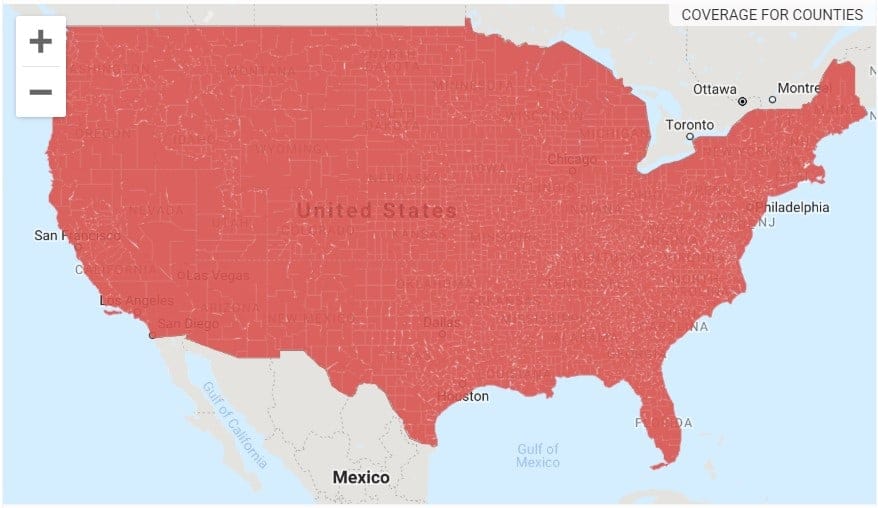
HughesNet is available across all 50 states (Yay Alaska, you’re included too!). Since launching their “Gen 5” satellite, you’ll get up to 25Mbps with all plans. Of course, there’s the caveat of “actual speed not guaranteed and may vary,” but that’s a common one.
While HughesNet doesn’t have as fast of speeds as Viasat, they’ve got consistency. And the problem with satellite internet speeds isn’t actually the speed itself– it’s the latency. Your signal has to travel thousands of miles, it’s going to take a bit. That’s just the nature of satellite internet.
And 25Mbps of actual internet speed is plenty for most people to browse, download, and stream.
Viasat recap-- how good are they?
So why might you choose Viasat? It’s an easy list:
- Speed – If you live in an area where you can get 50Mbps or 100Mbps, that’s much faster than HughesNet can offer.
- Good features – Like free installation, low equipment leasing fees ($9.99/mo.), and lots of ways to contact customer service
- Plans – If you live an area with great coverage, you’ll have your pick of many plans to choose from with varying speeds and data thresholds to suit your budget.
Best for: Those who want the fastest satellite internet available, with low equipment fees and free installation.
HughesNet recap -- how good are they?
HughesNet gets big bonus points from us for their transparent pricing. How else do they stack up?
- Speed – While slower overall than Viasat’s middle and top speeds, HughesNet stays rock-steady at 25Mbps, which is still twice as fast as Viasat’s lowest offering of 12Mbps. That 12Mbps plan actually falls below the FCC broadband standard, by the way – major point for HughesNet here.
- Features – Installation requires just a $99 “lease setup” fee when you lease the gateway for $14.99/mo. vs. buying the equipment outright (and paying them an increase $200 install fee) for $449.98
- Plans – With the lower data caps, HughesNet provides a great addition with the Bonus Zone data; although, given the time frame, many may not take advantage of it. All the better for those who do. You can set things up to automatically download during those hours with a little technical know-how, though.
Best for: Those who appreciate transparent pricing, and those looking for the lowest price for satellite internet.
FAQs
How is satellite internet different from cable or DSL?
Satellite internet is made up of 3 components: a satellite dish, a modem, and an orbiting satellite that receives and sends data.
Essentially, the dish is installed on your roof, then sends data to the orbiting satellite, which is owned by your ISP. The satellite then relays that to a large stationary dish back on earth (the provider’s Network Operating Center) that’s connected to the larger network– the internet. Back and forth they go, providing you with internet access.
In contrast, cable and DSL internet works by using underground lines (cable) or telephone wires (DSL) to deliver internet.
Are there any data caps? How many files can I download?
Depending on your chosen internet plan, you could have 10GB per month or 50GB, or 150GB. In either case, you’re not doing bad – and these aren’t hard data caps. You’ll still be able to use internet if you go past your cap, but it’ll be slower.
Of course, this is one of the largest frustrations with satellite internet: if you are looking for unlimited high-speed internet for rural areas, you won’t be able to find it because you’re forced to choose between these two; both of which significantly throttle you once you exceed your limit.
How does installation work?
The exact procedures will depend on the service provider. Most of the time it will be free, but some areas (or policies) will charge you. Most of the time, the actual installation is performed by contractors and shouldn’t take more than a few hours.
The installers will mount the dish on your home’s roof, then wire it to the modem (gateway), which will be inside your home. They’ll calibrate the dish and be on their way. If you’ve ever had satellite TV installed, it is a very similar process.
Is satellite slower than DSL or cable internet?
Yes. Because of smaller data allowance, as well as latency issues, satellite internet just isn’t able to keep up with either DSL or cable internet just yet. The difference is largest when compared to cable.
For example, while Viasat (satellite) may have a max download speed of 100Mbps, and DSL only 75Mbps, Cable can go all the way up to 400Mbps– 4 times the speed of satellite. Upload speeds between satellite and DSL are typically comparable (3Mbps), but cable leaps away again with upload speeds of up to 40Mbps on average.
But satellite has one thing going for it that neither DSL or cable can say: wider availability. That’s why satellite internet is still around.
Is satellite internet good for gaming?
Yes and no. Your satellite internet should be able to handle gaming services like Xbox Live and PlayStation Network, including downloading games and updates– like downloading anything else.
But live-action games – multiplayer online games played in real time – are where you’ll have issues with lagging. With satellite internet, latency will be high, rendering these kinds of games unplayable.